Top Destinations for a Short-Notice Christmas or New Year’s Yacht Holiday with Sunsail

Just one of the great perks of Sunsail Yacht Ownership is that you can make the most of all the spectacular sailing destinations Sunsail offers around the globe. From the palm-fringed beaches of the Caribbean to the sights, sounds and flavours of exotic Thailand, and the culture-packed ports and rich history of the Mediterranean, there’s always somewhere new to explore. But you’re not alone if the word “Med” gives you a slight pang of anxiety.
Med mooring, “Med-mooring”, or the reason many weekend sailors give the Mediterranean a wide berth, can feel daunting when you’re thinking about a Mediterranean yacht charter. Sliding your boat stern-to into a tight marina berth while dropping the anchor or picking up a slime line, dealing with crosswinds and an audience lining the quay with phones at the ready for potential YouTube fame is more than enough to make you put off your first Med adventure if you’re not yet comfortable with European-style docking.
Nowhere does chaos seem to break out more often than with the supposedly simple Med moor. In theory, the basics are straightforward: line up stern-first with your allocated berth, then either drop the anchor or pick up a slime line or mooring ball and reverse in until you’re close enough to pass your stern lines to the dockhand, or have a crew member step ashore and secure the windward stern line first, followed by the leeward one. Technically, that should be you neatly tied up. In reality, it helps to break the whole process down step by step.
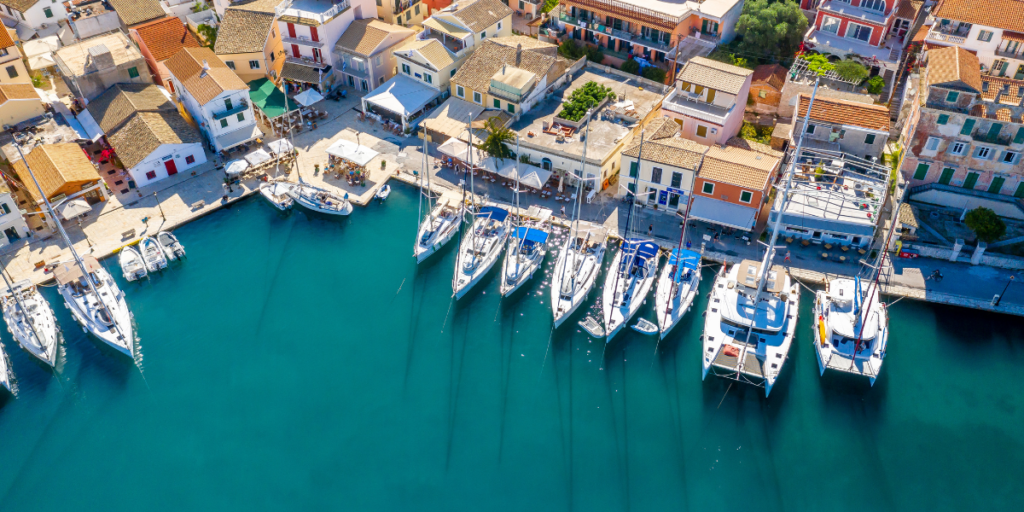
First things first: you are going to get very close to the boats on either side of you, especially in a busy marina at the height of a Mediterranean summer. Don’t panic – that’s exactly what your fenders are there for. Make sure you have fenders out on both port and starboard before you go in.
Next, communication is everything. Make sure your crew know exactly what you expect them to do. There are two ways you can approach this. You can shout last‑minute instructions as you head for the dock, or you can take a breath, slow down and explain clearly what you need from everyone before you even enter the marina. We strongly recommend the second option. If you are chasing entertainment value and fancy your 15 minutes of online fame, the first option will be hugely entertaining for everyone who isn’t actually on your boat.
Brief your crew properly on who is doing what – who will pass the stern lines, who will take the slime line, mooring ball or anchor, and where they should stand. A calm, well‑briefed crew who know their roles will make a world of difference to how in control you feel coming into a Med berth. Sunsail’s base in Croatia has an excellent video on how to calmly execute a med mooring if you need a bit of visual inspiration.
This is often the most confusing part of Med mooring: are you dropping the hook to hold the bow in place, or are you meant to be picking up a mooring ball or that aptly named slime line? Most Mediterranean marinas will either use slime lines or expect you to anchor.
This you can make sure of by contacting the marina on vhf before heading in to dock, and in the very likely case that no one answers in the busy med season, you would have to do a quick look at the boats around you as you come in to see whether they have their anchors out or a line tied to the bow.
You can usually clarify this by calling the marina on VHF before you head in. If, as often happens in peak Med season, no one answers, you’ll need to take a quick look at the boats already alongside as you approach and see whether they have anchors laid or lines running forward from the bow.
A slime line is similar in concept to a mooring line fixed to the seabed. When you Med moor, one end of the slime line is secured to the quay; a dockhand will pass the tail to your boat and you then walk it forward to the bow and cleat it off tight. Sometimes you’ll have a single slime line, sometimes two – in which case you’ll attach one to each bow cleat, port and starboard. Always secure the windward line first to keep the boat steady and stop yourself being blown off.
Remember that every boat in the marina will have slime lines lying ahead of them under the water, so take care not to wrap them round your prop.
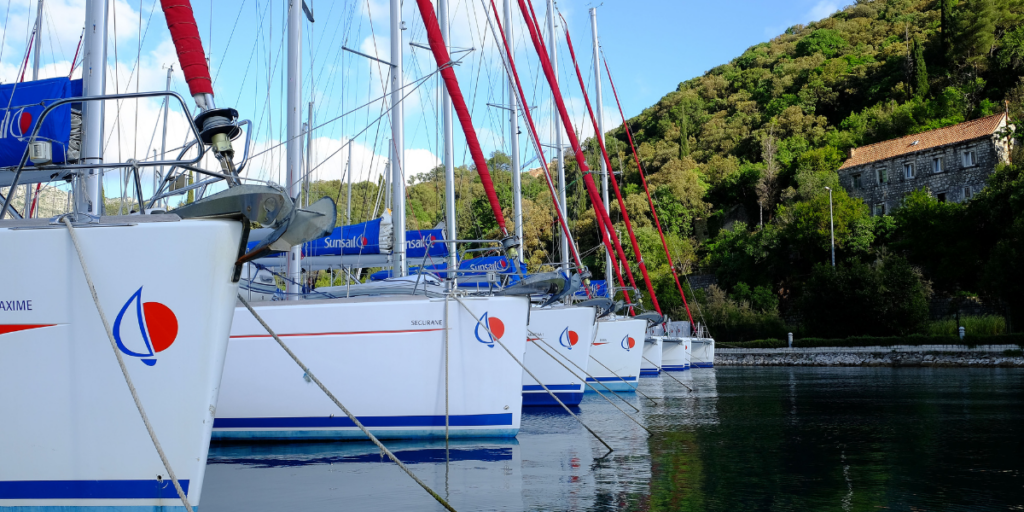
Anchoring can be trickier still, particularly in crowded Med marinas where there are anchors and chains scattered all over the place.
To avoid ending up with your chain twisted round someone else’s like spaghetti on a fork, make sure your approach is straight and lined up directly in front of your allocated berth. Most importantly, commit. The moment you start doubting yourself and throwing the boat into forward and reverse, you lose control and your nicely planned approach can quickly unravel.
Once you’re fully lined up with your berth, start dropping the anchor roughly three boat lengths from the quay. That’s a good rule of thumb, though you may need to adapt a little for depth and conditions. When you’ve paid out enough chain, go astern until you feel the anchor bite – without touching the quay. Once the hook is set, pass both stern lines ashore. Depending on the setup, you may have a “crinkle” – a large metal ring fixed to the dock that the line runs through before you make it off back on board – or a standard cleat.
Once the stern lines and bow slime line or anchor are secured, you can fine‑tune the distance between your stern and the quay by adjusting the chain and tweaking the stern lines until your passerelle comfortably reaches the dock.
This is often the first worry that springs to mind as soon as you think about anchoring in a busy marina full of overlapping chains, with poor visibility from all the prop wash stirring up the bottom. So how do you avoid crossing anchors in a packed Med harbour?
Try to drop and set your anchor as parallel as possible to your neighbours, while also keeping an eye on any boats directly opposite you. Depending on the conditions, a general guideline is to stop lowering your anchor about a boat length from the quay so you can still get close enough to step ashore. If you run out of chain and find you can’t get near enough to the dock, you’ll need to bring the anchor back up and start again. There’s no shame in this – it happens to the most experienced skippers. Just make sure your stern lines are long enough to reach the crinkles or cleats.
If you do find yourself in the all‑too‑familiar situation where another boat has managed to twist your anchor chain, there are some very handy tips out there on how to free a tangled anchor that are well worth a look before your trip.
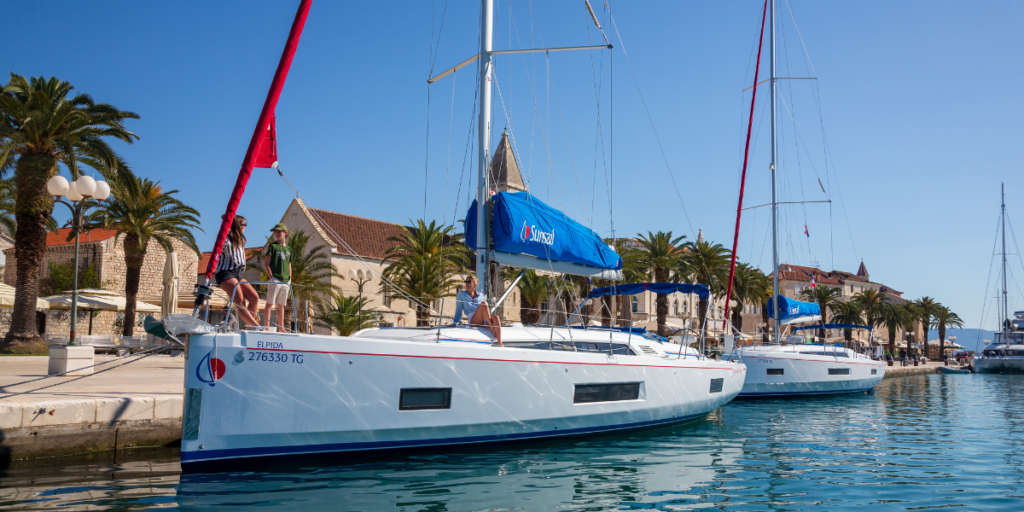
When you’re sailing somewhere new, take time to go through your cruising guides, online forums, advice from other skippers and marina websites so you have a decent idea of how the marinas you’re visiting are laid out. Before you head in to dock, call the marina on VHF to confirm the type of berth you’re being given.
Will you be going side‑to on a finger pontoon or stern‑to in a Med berth? If it’s a Med mooring, check whether you’ll be dropping anchor, taking slime lines or picking up a mooring ball. It’s also worth asking about any other quirks or hazards, such as very shallow patches or strong tidal streams. That way you know exactly what you’re facing and can mentally rehearse your Med mooring manoeuvre before you even arrive.
Explain calmly and clearly what you need each crew member to do. Depending on how many people you have on board, you’ll want someone in charge of the anchor, someone handling the slime line or mooring ball and at least one person on each stern line.
Get the boat ready by setting fenders at the widest points on both sides before you enter the marina, making sure your stern lines are long enough and checking that the anchor is ready to run free without tangles. The aim of a smooth arrival is to get your windward lines on first, as these are the ones that will hold you in place.
Before you commit to reversing into your berth, do a gentle pass ahead of it to scope things out. Check your fenders and lines are in the right place and adjust anything that looks off.
Use this pass to spot any hazards – for example, slime lines leading from other boats’ bows, or where other anchors and chains lie – and plan your approach accordingly.
Give yourself as much room as you can so you have a clear run. You need enough speed to maintain steerage and overcome prop walk, but still be slow enough that you can stop or abort safely if you need to.
There is absolutely no shame in abandoning an attempt if something doesn’t feel right. Better to back out calmly, reset and try again than force it and lose control. It’s perfectly normal to take more than one attempt to get a Med mooring right.
As you start to reverse into your berth, your crew should already be at their stations and ready to work their lines. It also helps to know roughly how long your passerelle is so you have a feel for how close your stern needs to be to the quay.
By this stage, all your lines should be on. If you find yourself too close in or too far out, adjust anchor chain and stern lines until you’re sitting at a comfortable distance and your passerelle reaches the dock without straining.
Then you can finally reward yourself with a cold drink. And if you’d like an extra boost of confidence before you go, you’ll find no end of helpful Med mooring videos and guides online to get you ready to book your next owners’ week at one of our Mediterranean Sunsail bases.